Raid and arrest of the Secret Annex occupants
Diary of Anne FrankThe Raid and arrest of the Secret Annex occupants on August 4, 1944, brought an abrupt end to the eight residents’ hidden life in an office building at 263 Prinsengracht. An SS sergeant and Dutch members of the Security Police arrested the people in hiding and two of their helpers, making the raid the decisive rupture between the diary’s account of concealment and the persecution that followed.
Background: A Life Made Illegal
The arrest followed years of restrictions that had progressively narrowed Jewish life in the Netherlands under German occupation. Jews were ordered to wear the yellow star, surrender bicycles, shop only during designated hours, attend Jewish schools, and stay off the streets at night; they were also barred from public transport, entertainment venues, sports facilities, and visits to Christian homes. These rules were not merely a backdrop: they shaped where the Frank family could go and made ordinary movement conspicuous.
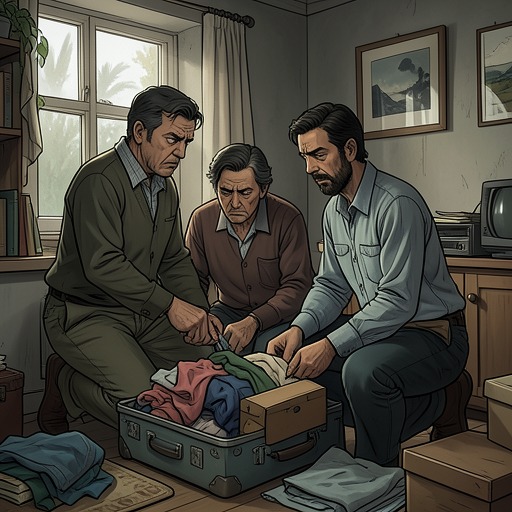
The family’s decision to go into hiding was planned for July 16, but Margot’s call-up notice forced them to bring the date forward by ten days. They had spent months moving furniture and clothing out of their apartment. On the day they left, Anne, her parents, and their schoolbags and shopping bags walked through pouring rain; the yellow star on their clothes made their flight legible to people passing on their way to work. Their destination was the hiding place in Otto Frank’s office building.
The building’s divided purposes made concealment possible but precarious. Its ground floor held a warehouse and workrooms, including a milling room where cinnamon, cloves, and a pepper substitute were ground. Some office workers knew the family was coming; warehouse staff and assistants were kept uninformed. The arrangement depended on a boundary between those who knew and those who did not—a boundary that could be strained by routine work, unexpected visitors, or a breach of the building’s security.
The Annex Under Threat
The raid did not arrive in a life untouched by danger. An earlier break-in showed how quickly the warehouse could become a point of exposure. When Peter found both the warehouse and street doors open, the residents followed their emergency instructions: they kept quiet, avoided using water, dressed by eight, and did not use the bathroom. The burglars had forced doors with a crowbar and stolen cashboxes, blank checkbooks, and the residents’ entire sugar allotment of 330 pounds. The incident made the practical costs of insecurity plain: a break-in could threaten both discovery and the supplies on which the hidden group depended.
After another crisis, security measures tightened further. Fritz Pfeffer was to work in the bathroom, Peter was assigned to patrol the house between eight-thirty and nine-thirty, and he was no longer allowed to open his window after someone associated with the warehouse had noticed it. The residents could not flush the toilet after nine-thirty at night. A night watchman, Sleegers, was hired, and a carpenter from the underground was expected to build a barricade from the white Frankfurt bedsteads. They also had to consider whether the watchman could be trusted and whether dogs might bark at someone behind the door. The Annex was a refuge, but its safety rested on rules, vigilance, helpers, and a succession of practical defenses.
The Raid on August 4
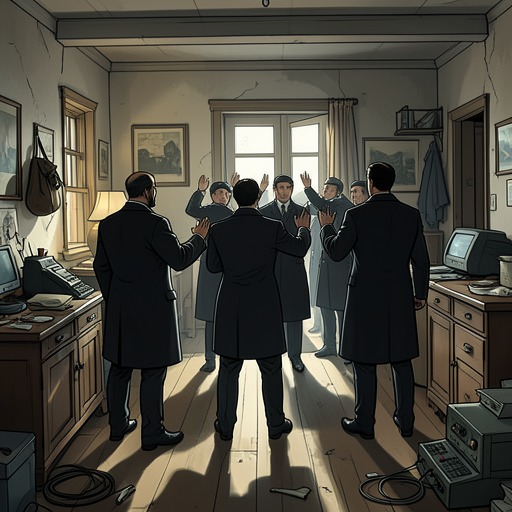
On the morning of August 4, 1944, between ten and ten-thirty, a car pulled up at 263 Prinsengracht. An SS sergeant, Karl Josef Silberbauer, appeared in uniform with at least three armed Dutch members of the Security Police in civilian clothes. The account states that someone must have tipped them off, but does not identify the informant.
The police arrested all eight people hiding in the Annex, as well as Victor Kugler and Johannes Kleiman, two of the helpers who had supported them. Miep Gies and Elisabeth (Bep) Voskuijl were not arrested. The officers also took the valuables and cash they found in the Annex. The raid thus reached beyond the concealed rooms: it struck the network of people and material resources that had made the hiding place possible.
Consequences and Significance
After the arrest, Kugler and Kleiman were taken to a prison in Amsterdam. On September 11, 1944, they were transferred without trial to a camp in Amersfoort. Kleiman was released on September 18 because of his poor health and remained in Amsterdam until his death in 1959; Kugler escaped imprisonment in March 1945 while prisoners were being sent to Germany as forced laborers and later immigrated to Canada.
For the Annex residents, the raid ended the routines built around silence, restricted movement, and constant watchfulness. The diary’s earlier details—the yellow star, the bags carried in the rain, the warehouse doors, the stolen sugar, the barred window, and the planned barricade—acquire their full weight in retrospect. They show concealment not as a single act of hiding, but as a sustained and vulnerable practice, ultimately unable to protect its occupants from arrest.